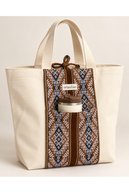
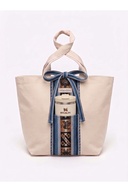
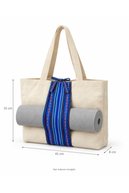
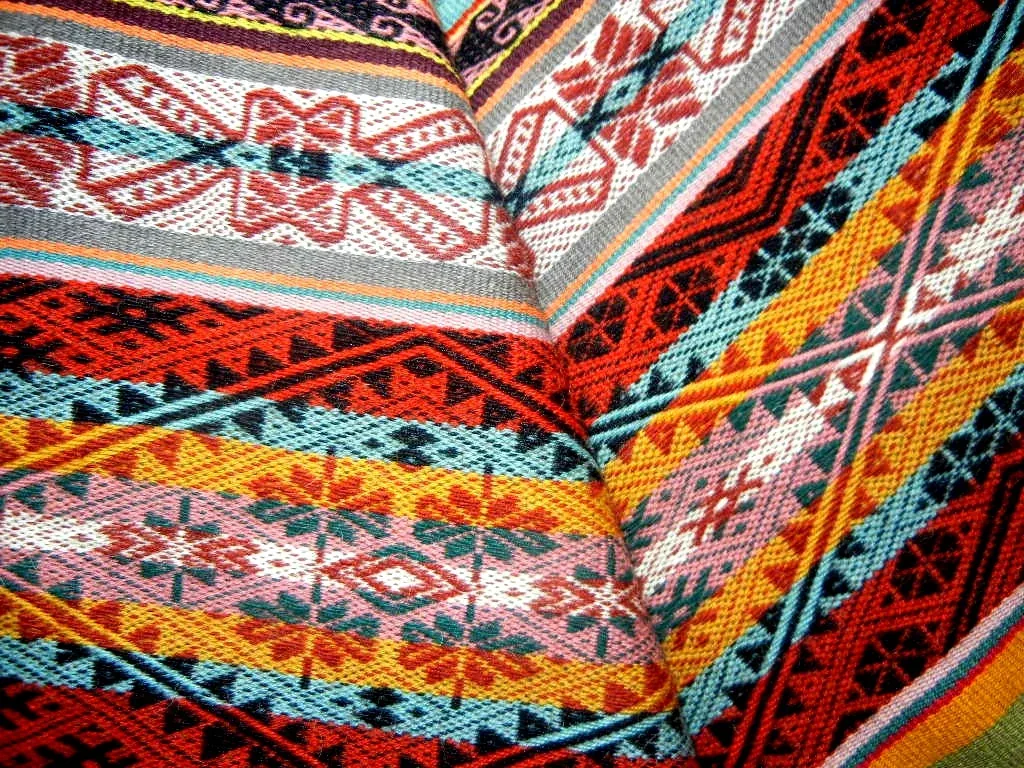
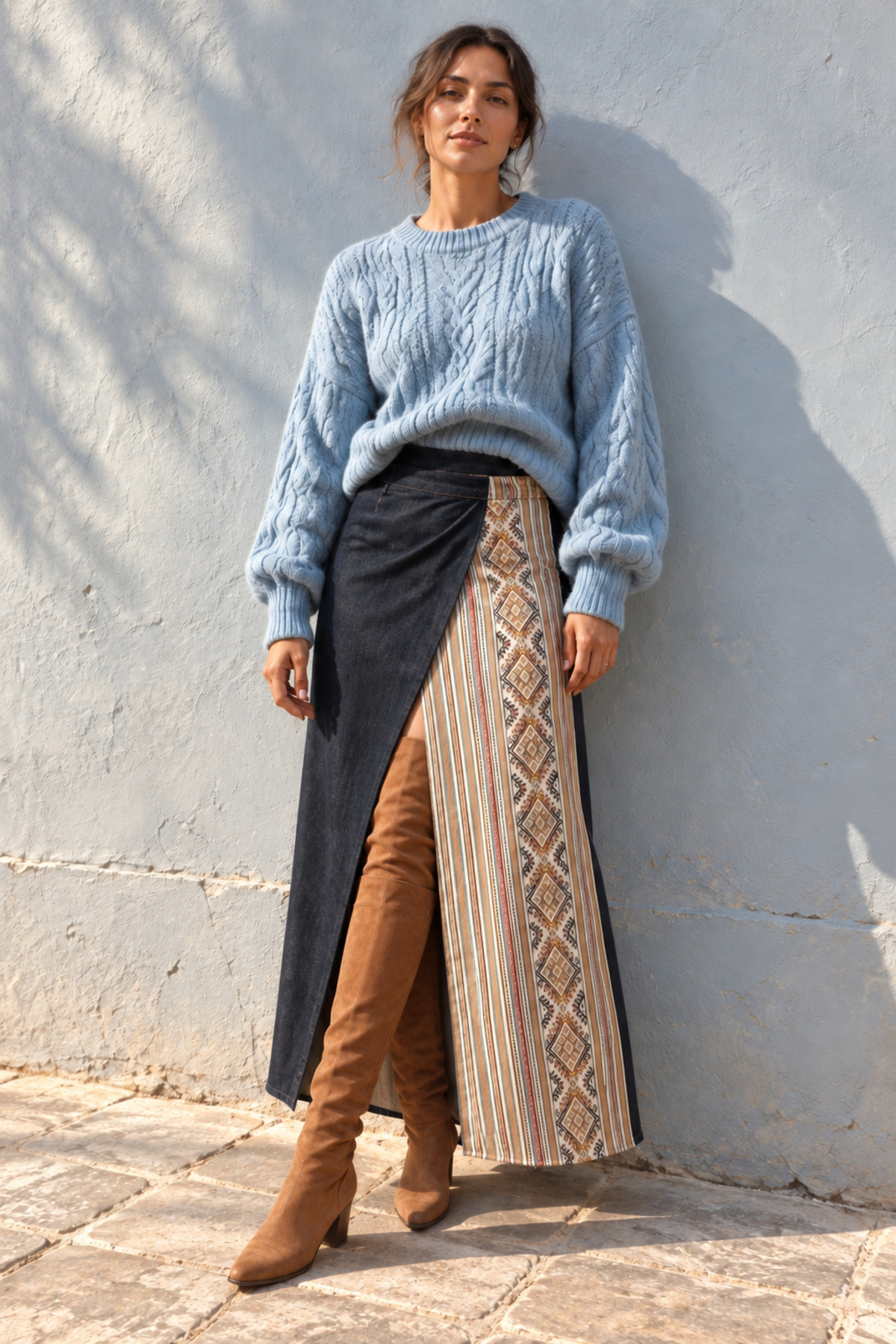
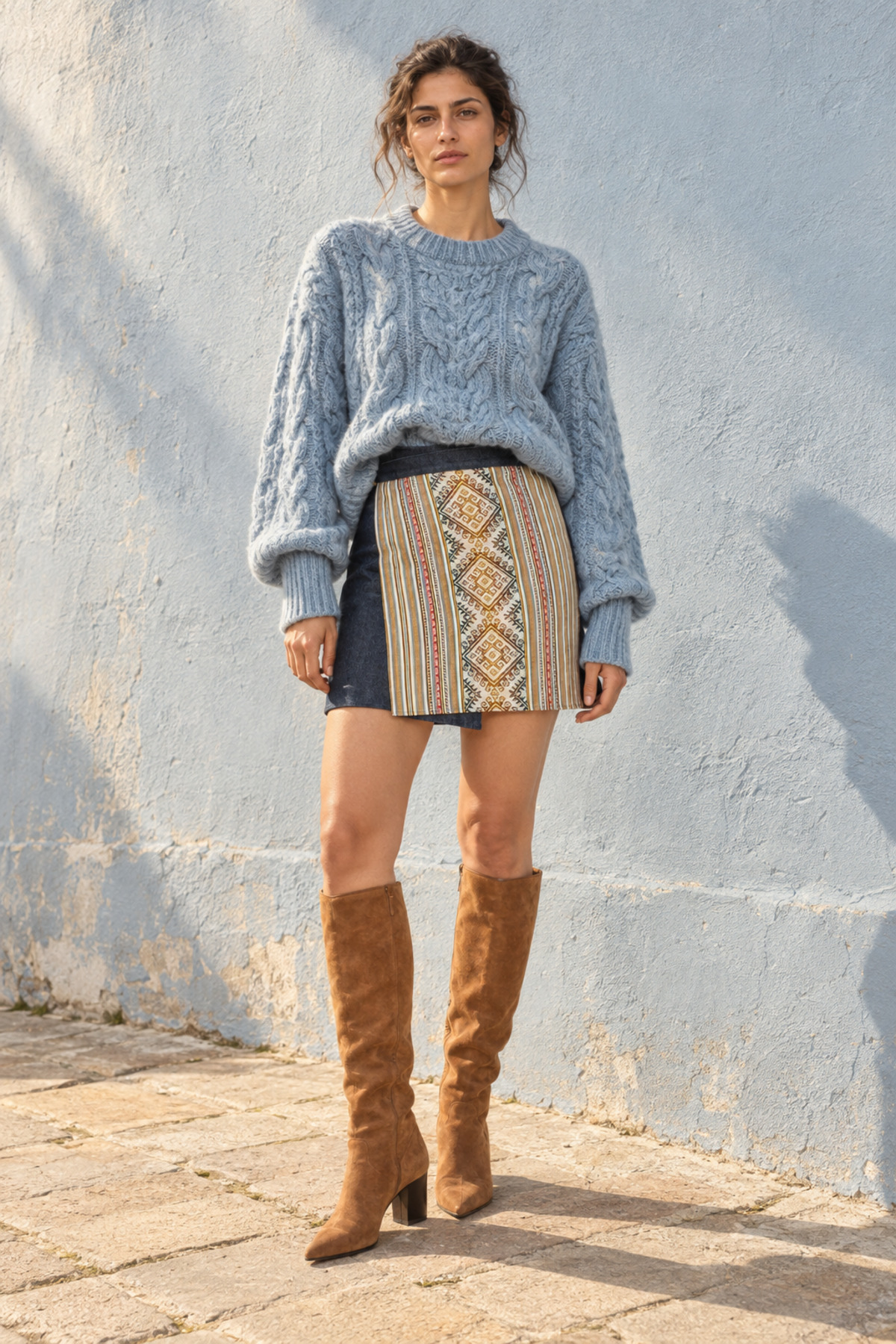
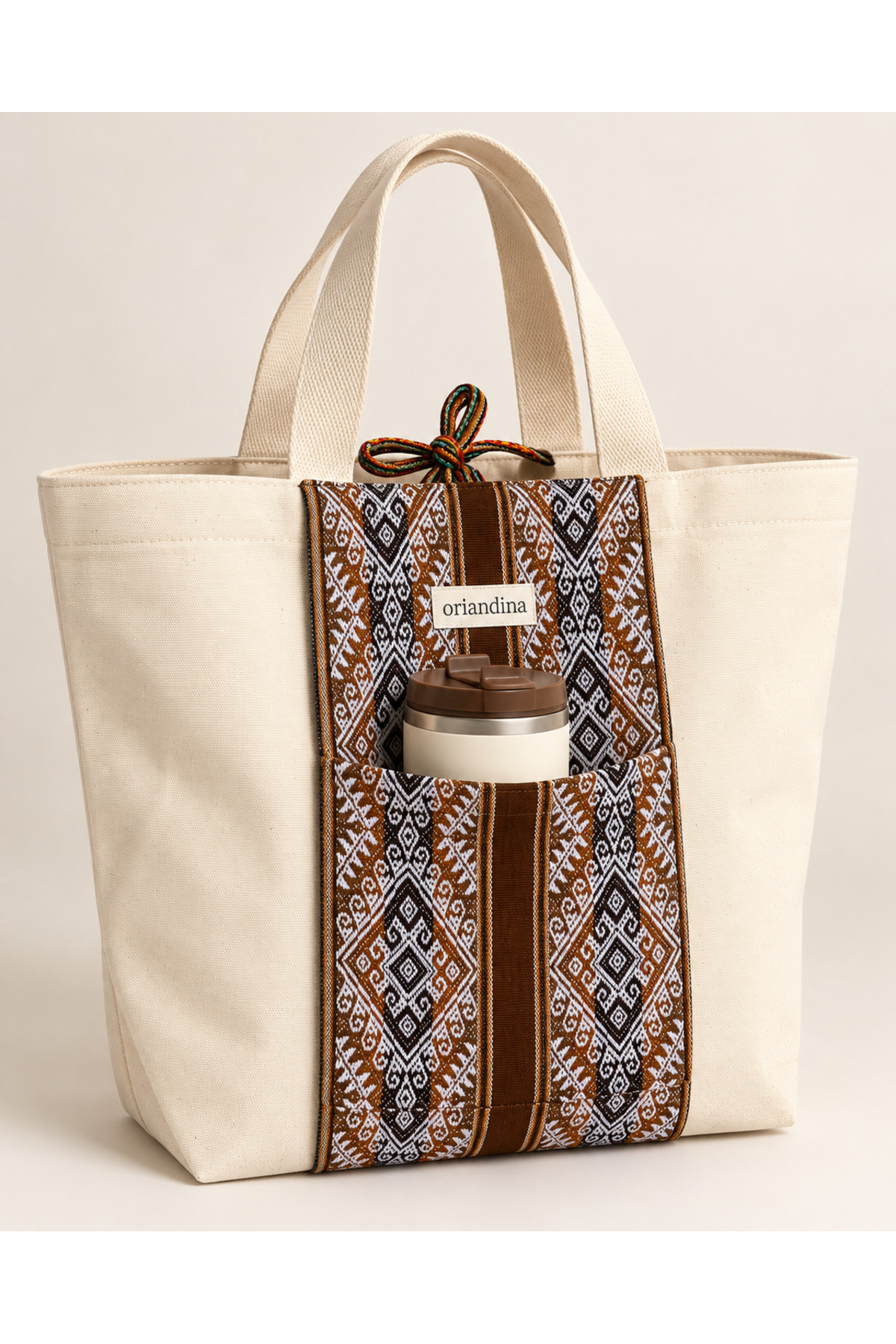
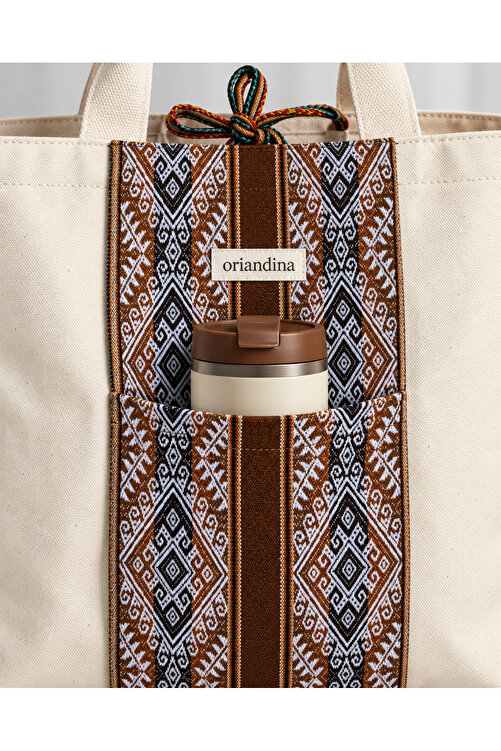
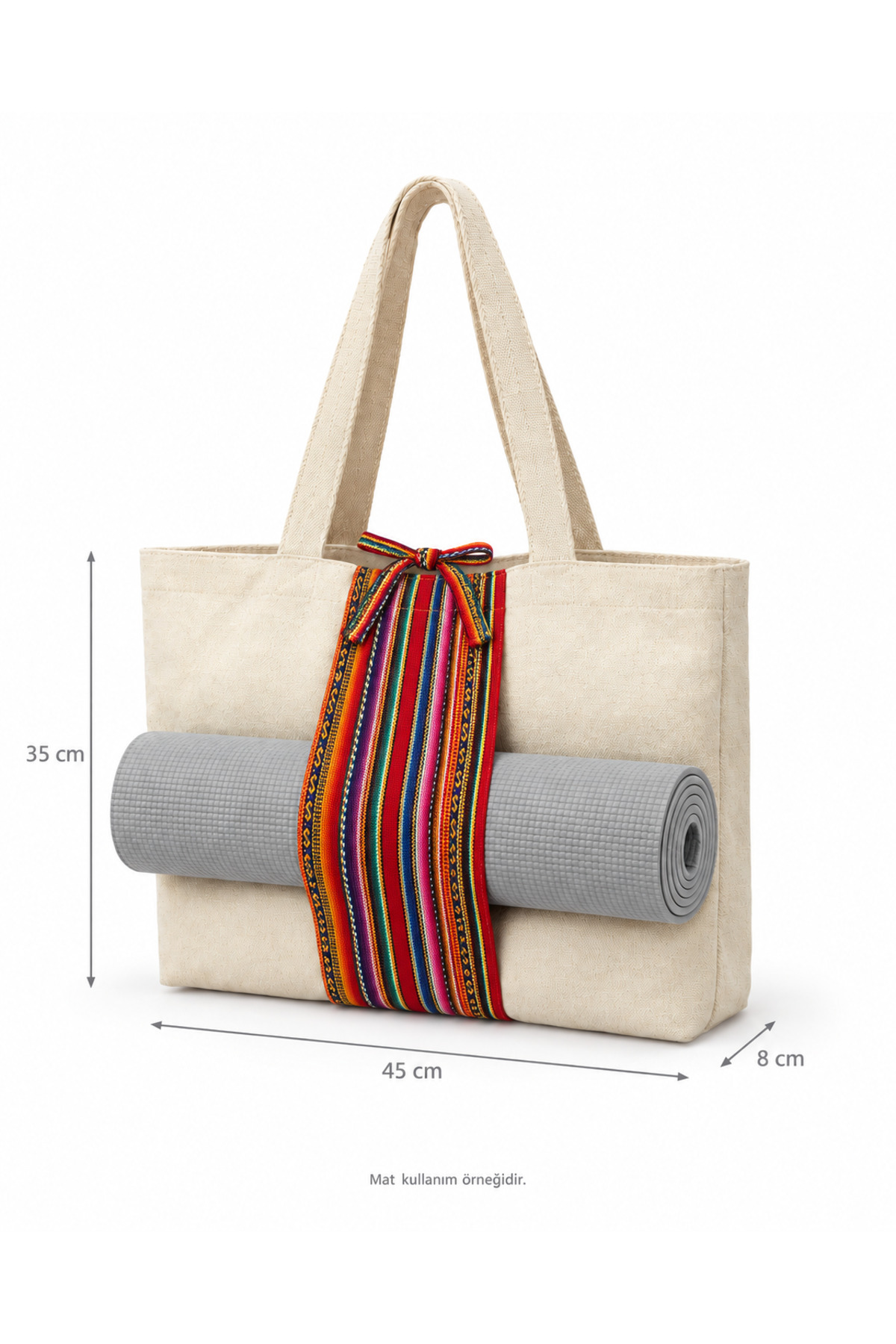
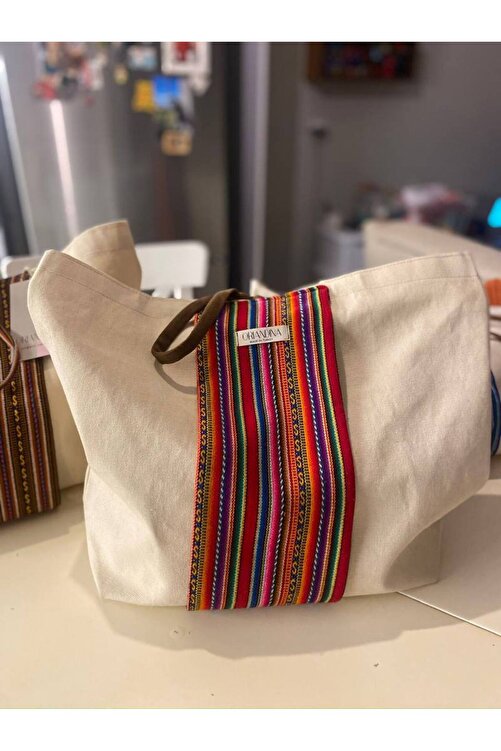
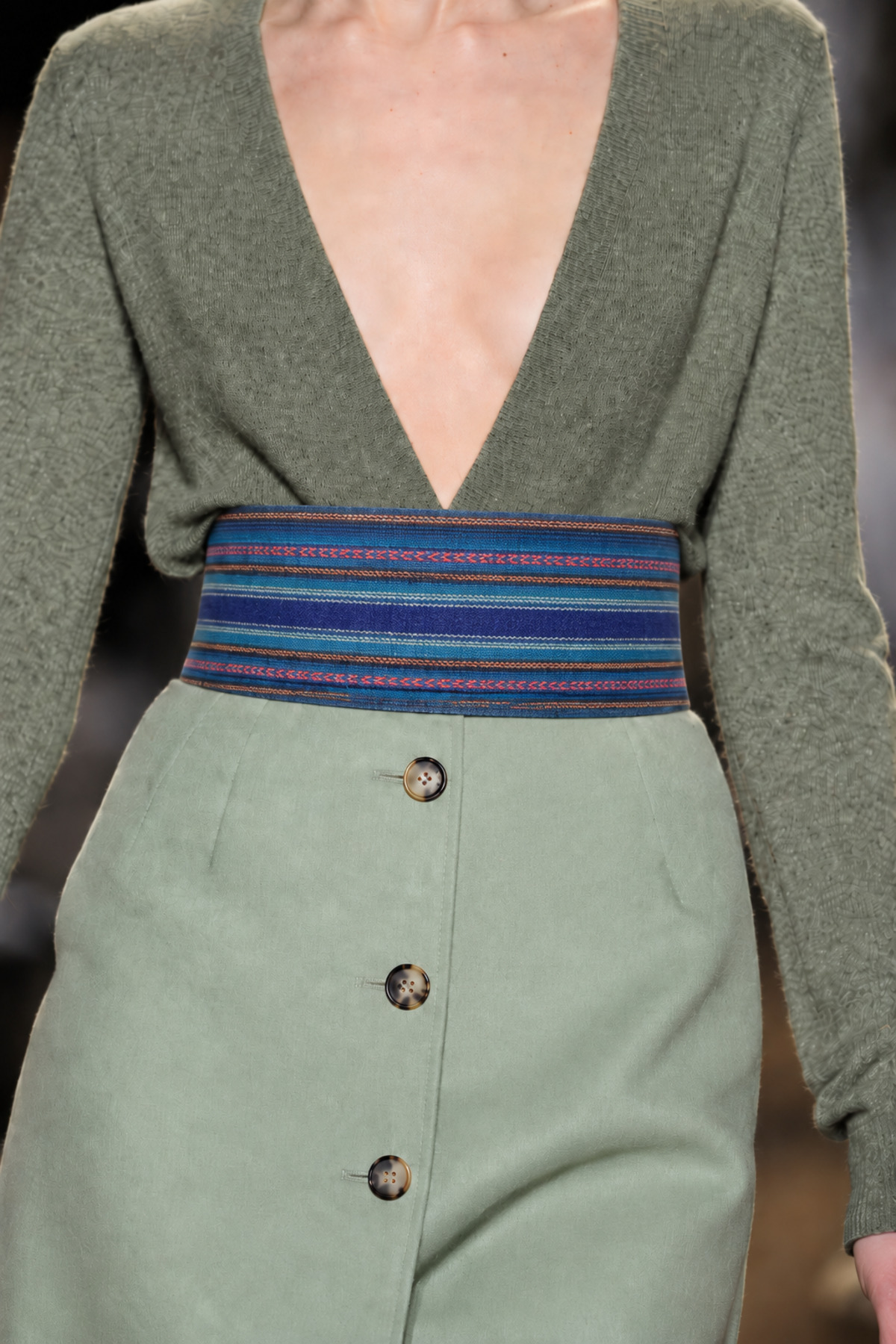
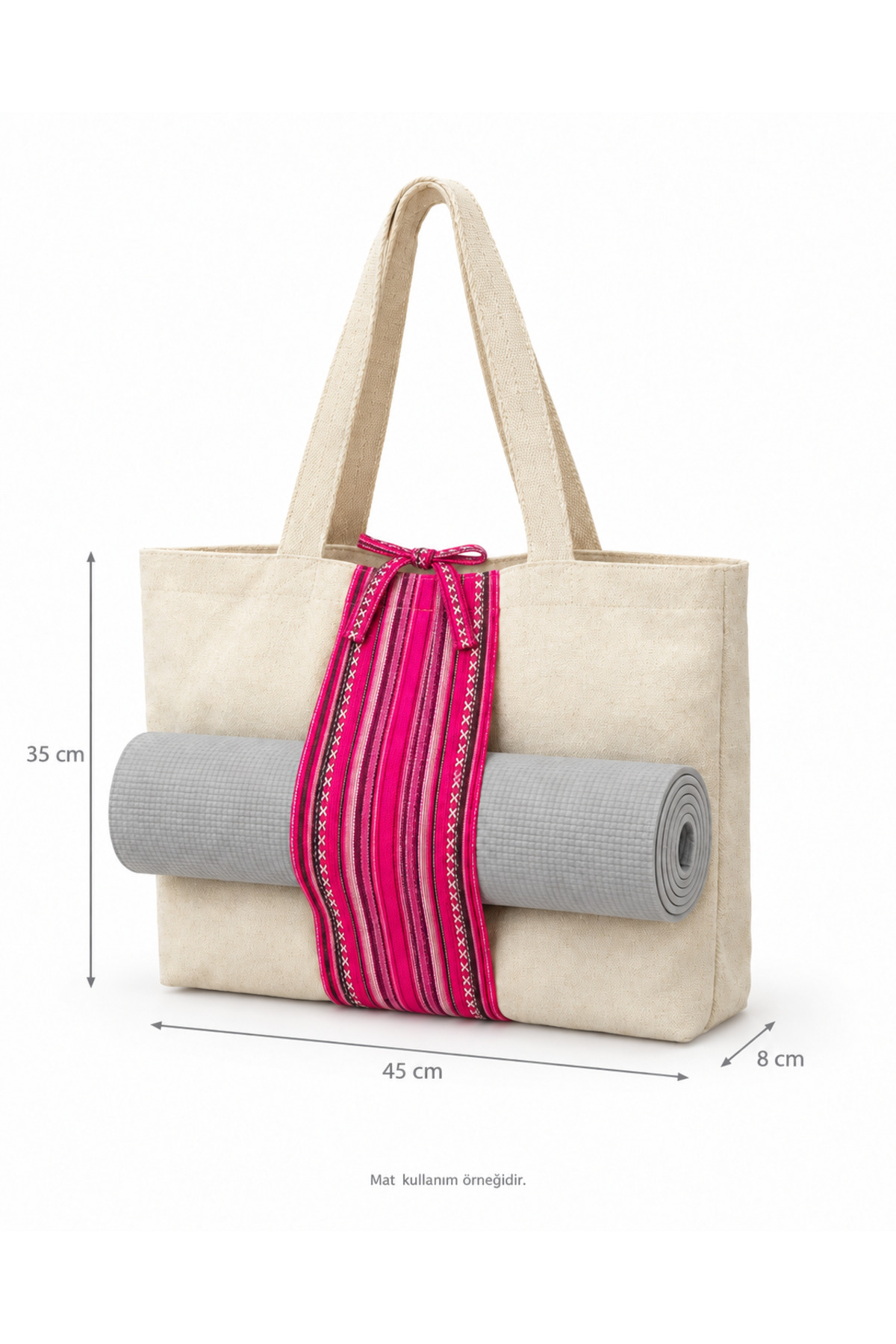
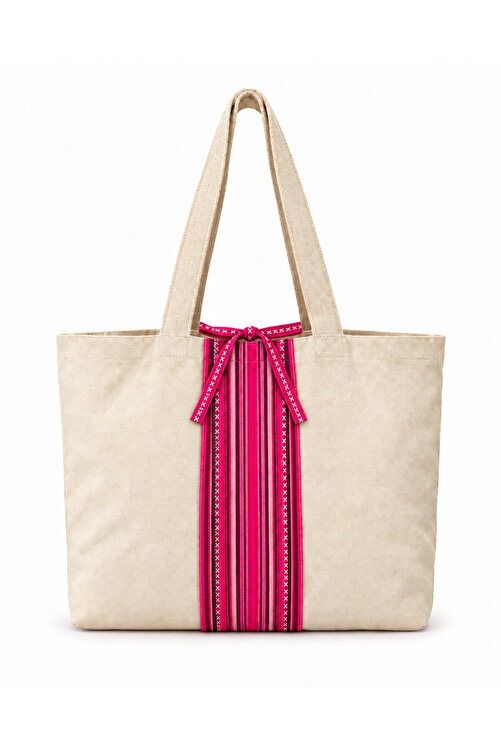
Made with fabrics brought especially from Peru, SIS STUDIO’s Andina belts, bags and skirts carry the living textile tradition of the Andes into everyday style with a modern interpretation. Their world of animal figures, human forms and geometric motifs holds traces of nature, local life and stories handed down through generations. In our Nasca belt designs, Peru’s famous desert lines reappear as patterns on cotton poplin. Made in small numbers in our Ankara atelier, these pieces bring strong colour and characterful pattern to your everyday wardrobe.
Read the full story
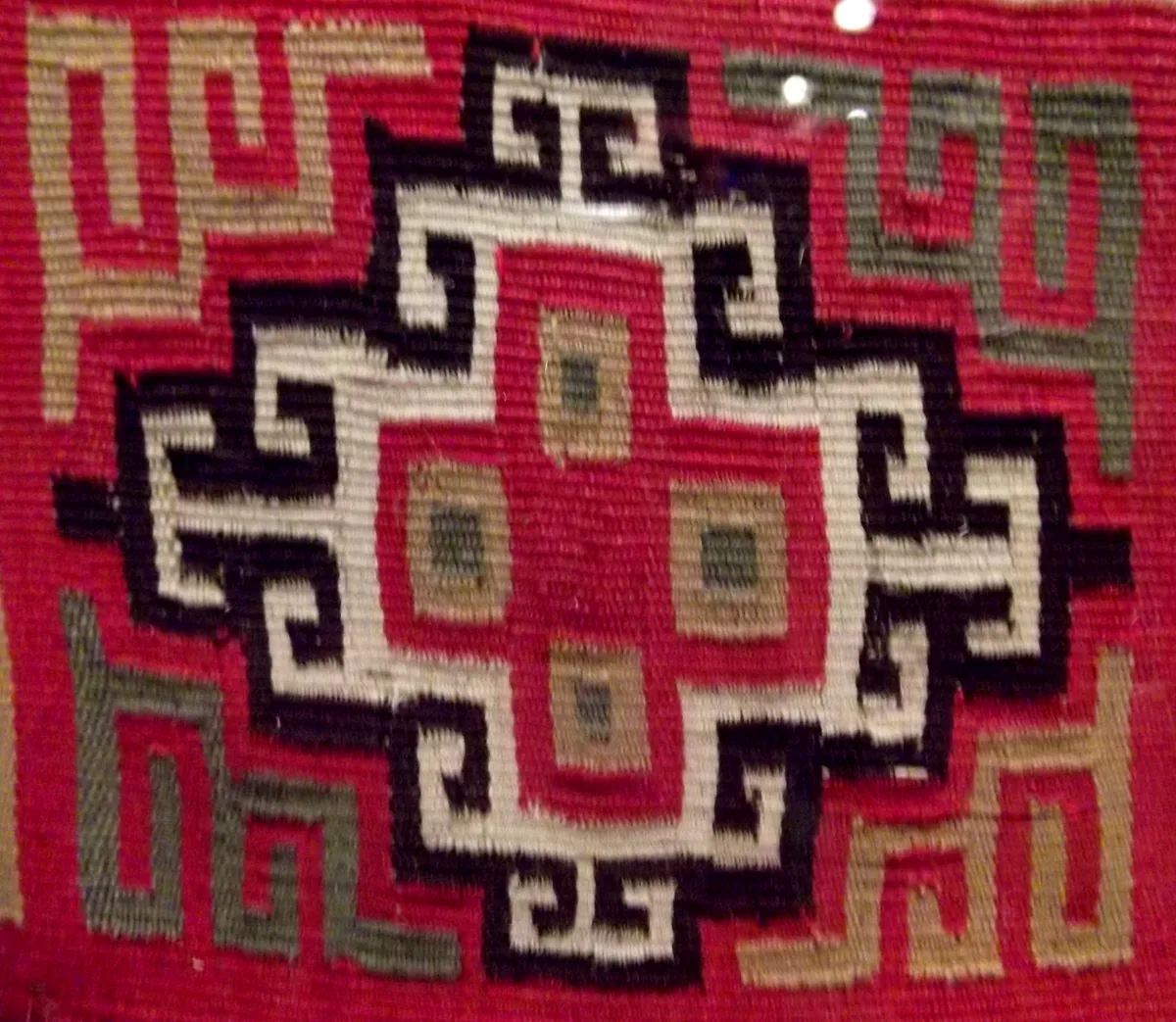
In the textile tradition of the Andes, colours and patterns carry traces of a relationship with nature, of belief and of everyday life. In Peru this tradition began to take shape thousands of years before the Inca Empire, and it lives on today in the hands of local weavers. An animal, a human figure or a geometric shape on a fabric can tell a detail from the weaver’s own world. As patterns pass from generation to generation they gather new stories; the meaning of the same motif can change from region to region, community to community and weaver to weaver.
One of the best-known chapters of this heritage is the Inca Empire, centred on Cusco. The Inca called their land Tawantinsuyu, Quechua for “the four parts together”. As the empire expanded in the 15th century and brought different lands and peoples together, textiles were an important part of belonging, social standing and ceremonial life. One Inca origin legend tells how Manco Capac and Mama Ocllo, children of the Sun, rose from Lake Titicaca and set out to found Cusco. In these stories the lake, the mountains and the sky are where life and the sacred meet.
The roots of this way of seeing reach back further than the Inca. In some ritual imagery of early Peruvian cultures, humans, powerful animals and supernatural beings merge into one another. These images of transformation, associated with shamanic traditions, speak of the bond between people, nature and the unseen world. For centuries textiles were part of daily use as well as of ceremony and reverence for the ancestors.
In the symbolic language of the Andean world, the puma is associated with the earth and its strength, and the condor with the sky. The serpent is among the sacred images linked to water and fertility. The stepped cross of the chakana is a symbol that many Quechua communities associate with values, seasons and sacred beings. The llama, which carries loads, gives its fibre to weaving and accompanies life in the mountains, has its own place on the fabric. Viracocha, the creator god, is one of the central figures of Andean belief; researchers associate the staff-bearing deity seen in some ancient artworks with him.
Human figures belong to this world of pattern too. In SIS STUDIO’s reading of the story, the chismosa, passed down as “the gossiping girl”, is a detail that recalls how close these patterns are to everyday life and human humour.
Further south, the Nasca lines form another part of the region’s visual heritage. Long before the Inca Empire, huge animal figures and geometric lines were drawn across the desert floor, and their purpose is still being studied. Often discussed for their ceremonial role, the lines continue to fascinate with their scale and variety. In SIS STUDIO’s Nasca designs, the visual world of these lines reaches everyday wear through patterns on Peruvian cotton poplin.
SIS STUDIO brings fabrics specially sourced from Peru together in a modern interpretation across its Andina belts, bags and skirts and its Nasca belt designs. Made in small numbers in our Ankara atelier, these pieces keep Peru’s heritage of weaving and pattern alive in the way we live today. In a sash belt that completes a dress, or a bag that stays with you all day, colour and pattern add a distinctive touch to everyday style. The piece you carry makes room in your own life for the story of a distant land.